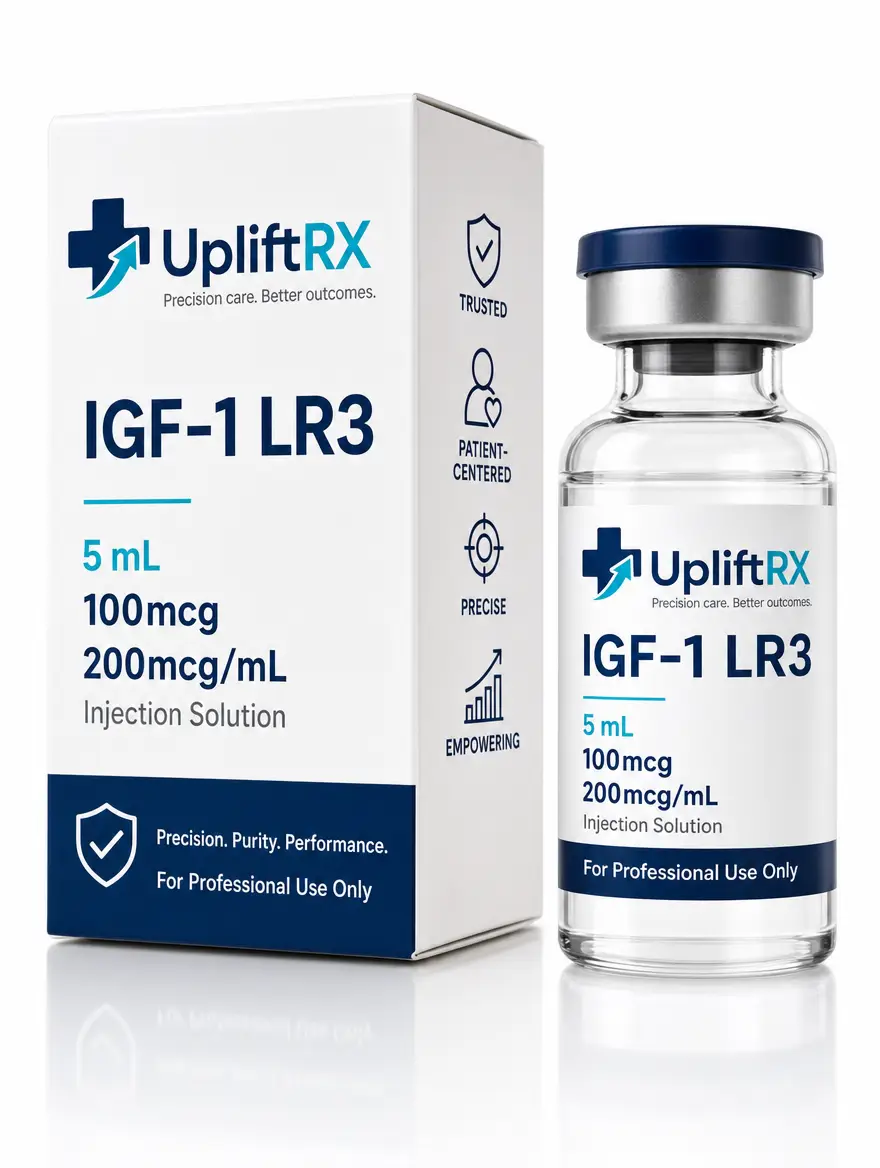
IGF-LR3
Long-acting IGF-1 analogue for muscle hypertrophy, fat loss, and cellular repair.
Prescriptions are issued only after an online consultation with an independent, licensed clinician. Compounded medications dispensed by our state-licensed partner pharmacy are not FDA-approved.
How IGF-LR3 treatment works
How it works
Hormone optimization restores levels of testosterone, estrogen, progesterone, or supporting hormones toward a healthy physiologic range, guided by your labs and symptoms. Dosing is individualized and re-checked with follow-up bloodwork.
What to expect
- Baseline labs establish your starting hormone panel.
- Weeks 2–6: energy, sleep, and mood changes typically begin gradually.
- Week 8–12: follow-up labs confirm levels and guide dose adjustments.
Common side effects
- Acne or oily skin
- Fluid retention
- Mood changes during titration
- Injection-site irritation (injectable forms)
Safety & who it's not for
Hormone therapy requires screening for cardiovascular risk, hormone-sensitive cancers, fertility plans, and clotting history. It is prescribed only after a clinician reviews your intake — and for most protocols, your labs.
Frequently asked questions
Will I need bloodwork?
Yes — hormone therapy is lab-guided. We can order a baseline panel through our lab partners with draws at Quest or Labcorp locations near you, typically resulted in 2–5 business days.
Does TRT affect fertility?
Testosterone therapy can suppress sperm production. If future fertility matters to you, tell your clinician — alternatives like enclomiphene or adjunct HCG are designed to preserve it.
How long until I feel different?
Most people notice initial changes within 2–6 weeks, with full effect over 3–6 months. Your clinician tracks symptoms and labs together.