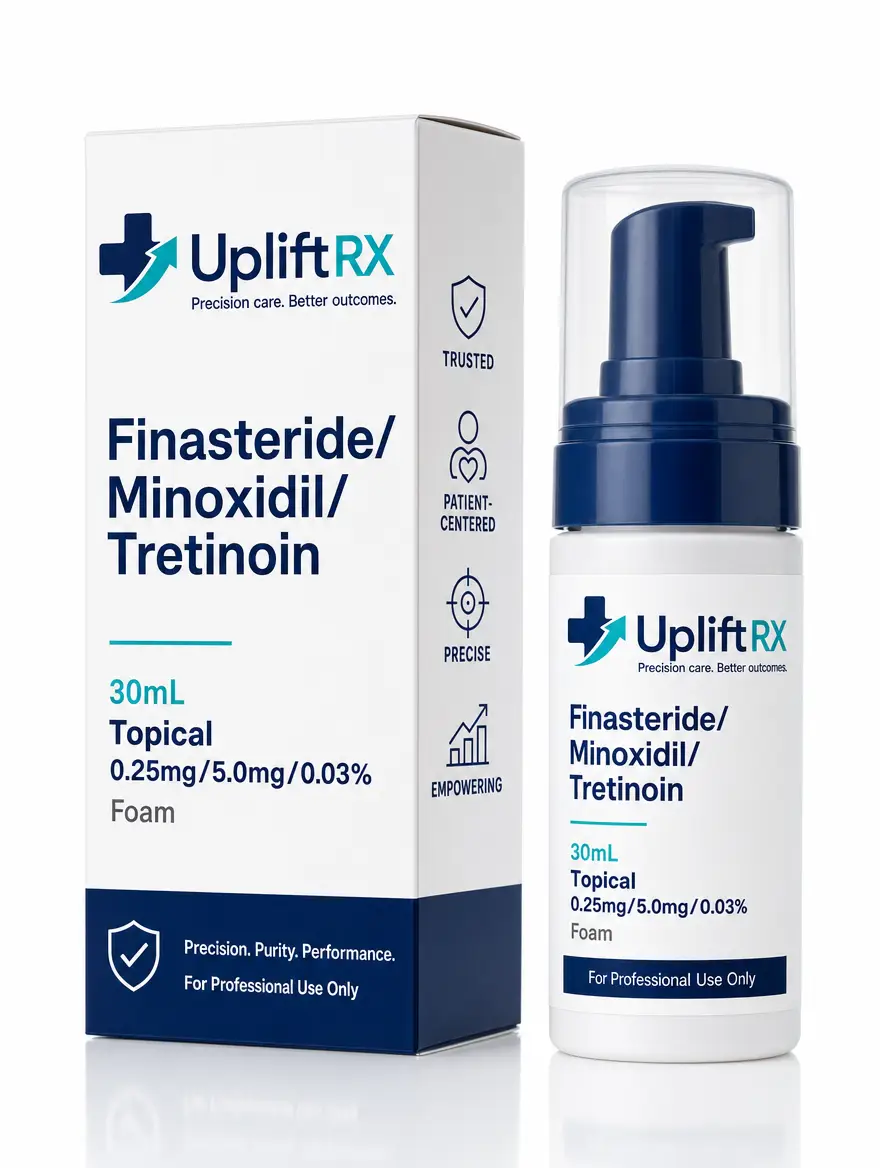
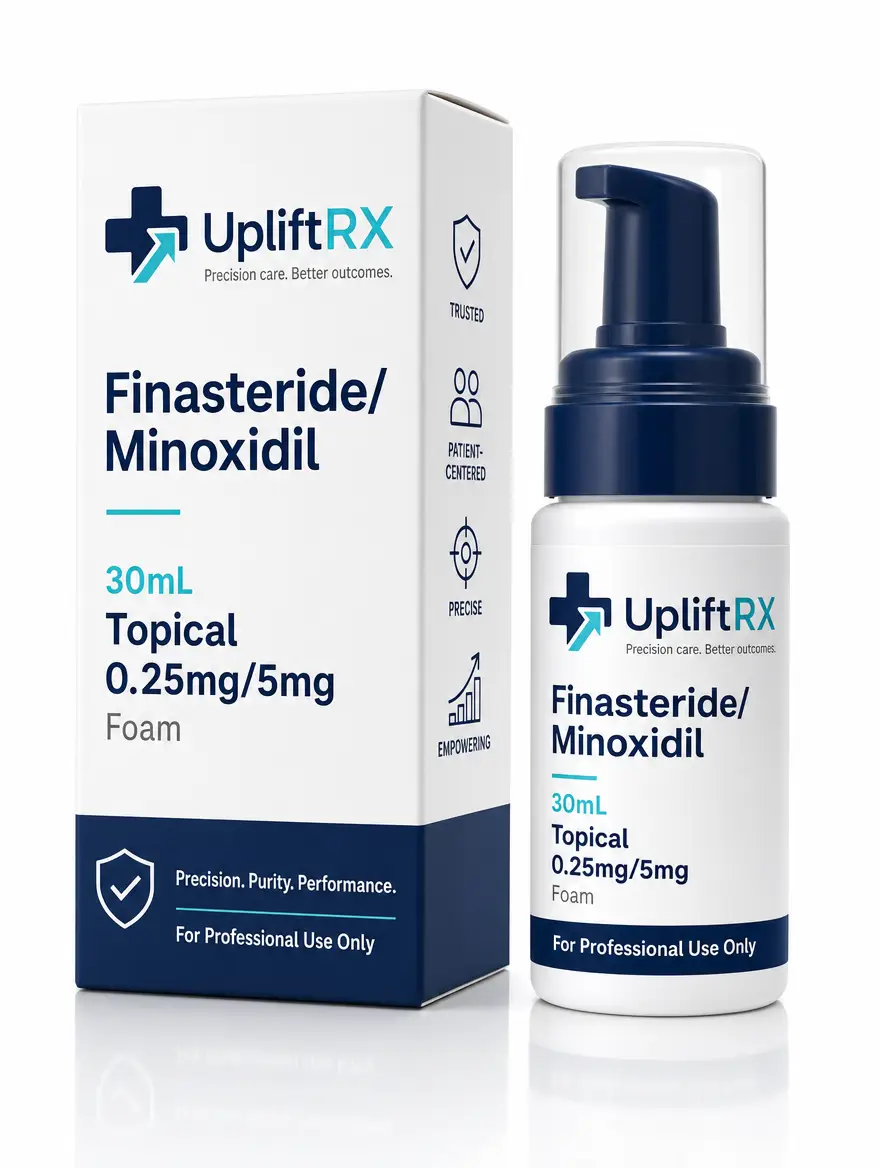
Finasteride/Minoxidil
DHT blocker + scalp vasodilator combination for synergistic hair retention.
Prescriptions are issued only after an online consultation with an independent, licensed clinician. Compounded medications dispensed by our state-licensed partner pharmacy are not FDA-approved.
How Finasteride/Minoxidil treatment works
How it works
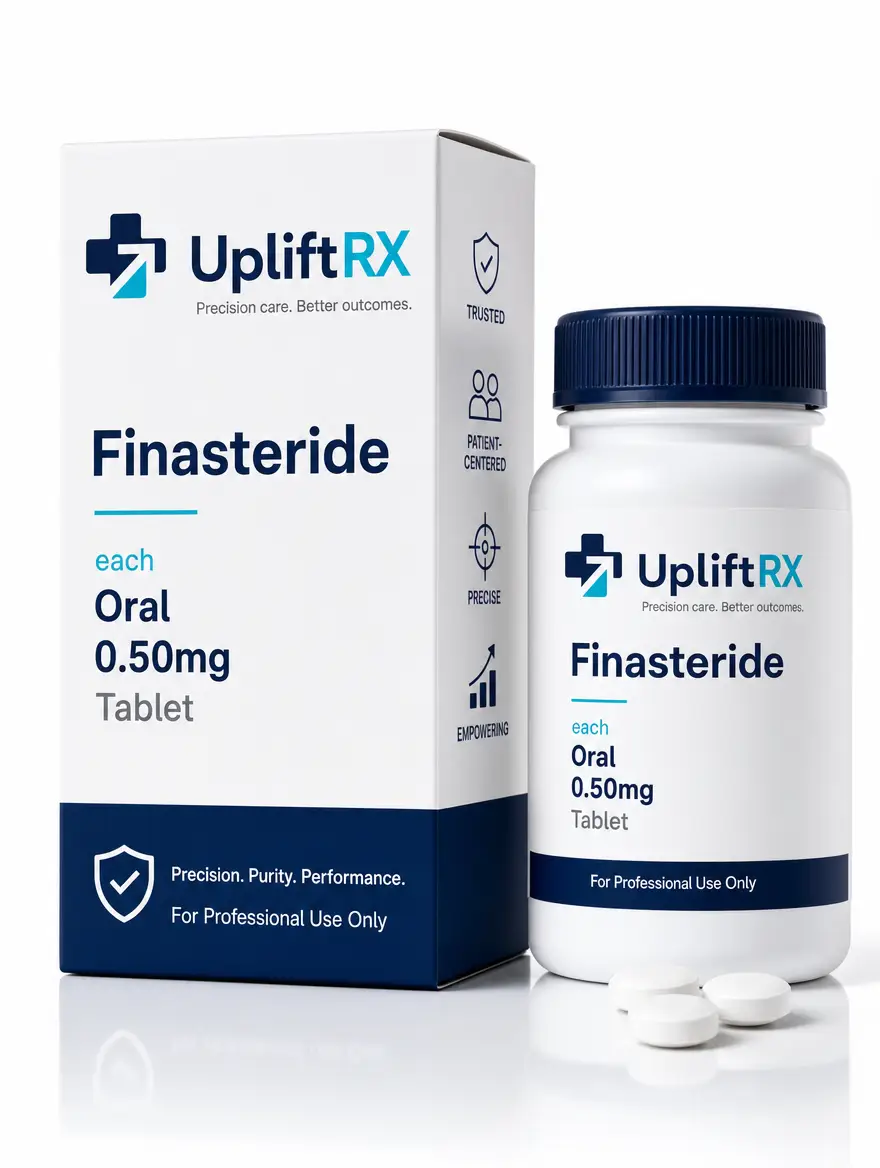
Hair-loss treatment combines DHT-pathway blockers (finasteride/dutasteride) that slow the hormonal driver of pattern loss with growth stimulants (minoxidil) that extend the hair growth phase — oral or topical, matched to your pattern and tolerance.
What to expect
- Months 1–3: shedding stabilizes; a brief 'dread shed' can occur and is normal.
- Months 3–6: visible regrowth typically begins at the crown and hairline.
- Months 6–12: full effect; progress photos help your clinician fine-tune.
Common side effects
- Scalp irritation or dryness (topicals)
- Decreased libido in a small percentage (oral finasteride)
- Unwanted facial hair growth (topical minoxidil migration)
- Initial temporary shedding
Safety & who it's not for
Finasteride and dutasteride must not be handled by pregnant women and are prescribed to women only in specific post-menopausal contexts. Tell your clinician about mood history and family planning.
Frequently asked questions
How long until results?
Hair cycles are slow: expect 3–6 months for visible change and up to 12 months for full effect. Consistency is everything.
Oral vs topical?
Topicals act locally with fewer systemic effects; orals are more convenient and slightly more potent. Your clinician will recommend based on your pattern, age, and preference.
What if I stop?
Benefits reverse over several months as the underlying pattern resumes. Most members treat it as ongoing maintenance.